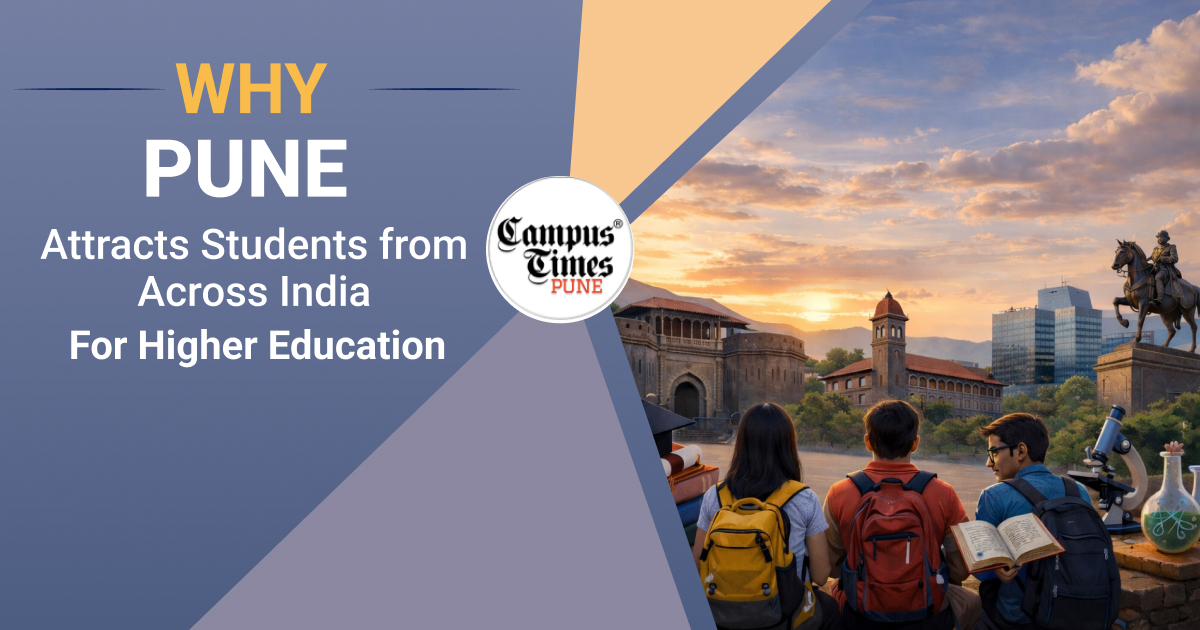
Why Pune Attracts Students from Across India for Higher Education
Ask students when they first decided to come to Pune and most won’t point to a brochure or a ranking. The decision often came together slowly, through conversations with seniors, cousins, teachers, or someone they met during an entrance exam queue. Pune entered the picture not as an abstract “education destination” but as a place where people seemed to grow into themselves.
For many students arriving from different parts of India, Pune feels less like a gamble and more like a continuation. A city where academic ambition and everyday living coexist without constantly competing for attention. Over time, this balance has made Pune a magnet for students who want more than just a degree.
A City Built Around Learning Without Making It Overbearing
One of Pune’s quieter strengths is how deeply learning is embedded into the city without dominating it. Colleges and universities are spread across neighbourhoods that feel lived in rather than manufactured. Campuses sit next to residential lanes, markets, libraries, cafes, and public spaces.
This physical integration matters. Students don’t feel sealed inside institutional bubbles. They move between classrooms and the city with ease, picking up influences from both. A morning lecture can be followed by an afternoon spent reading in a public library or discussing ideas at a nearby cafe. Learning feels continuous, not confined.
For students coming from tightly controlled academic environments, this openness can be transformative. It encourages independence and curiosity without demanding constant performance.
Academic Diversity That Allows Students to Change Direction
Pune attracts students from across India partly because it rarely forces early certainty. The city hosts institutions across engineering, medicine, law, liberal arts, design, management, social sciences, and emerging interdisciplinary fields. This diversity allows students to shift interests without uprooting their lives entirely.
It is common to find engineering students attending theatre workshops, commerce students learning coding, or science graduates exploring design and research pathways. Exposure to different disciplines happens naturally, through peers, events, and shared spaces rather than formal cross enrollment structures.
For students unsure about rigid career paths at eighteen, Pune offers room to explore before committing. That flexibility is often as valuable as any academic credential.
Colleges That Function as Ecosystems, Not Just Class Schedules
Many students arrive in Pune expecting structured academics and discover something more layered. Colleges here often operate as ecosystems where learning happens through clubs, competitions, student led initiatives, and informal mentorship.
Fests, conferences, hackathons, exhibitions, and cultural events are not peripheral. They are integral to how campuses function. Students gain experience in organising, negotiating, presenting, and leading long before graduation.
This culture attracts students who want active engagement rather than passive instruction. Over time, campuses become spaces where students test ideas and learn from consequences, not just evaluations.
A City That Makes Living Independently Less Intimidating
For students moving away from home for the first time, the city itself matters as much as the institution. Pune has earned a reputation for being navigable and forgiving. Public transport, shared housing, student friendly neighbourhoods, and relatively accessible daily expenses make the transition smoother.
Living independently in Pune often becomes an education in itself. Students learn to manage budgets, time, relationships, and responsibilities at a manageable pace. The city does not overwhelm newcomers immediately, allowing them to grow into autonomy gradually.
This sense of safety and familiarity is especially important for students arriving from smaller towns or distant states. Pune feels large enough to offer opportunity but small enough to feel manageable.
Peer Networks That Extend Beyond Campuses
Another reason Pune continues to draw students nationally is its dense student population. Peer networks form quickly and stretch across colleges, disciplines, and neighbourhoods. Friendships are not limited to classmates but expand through shared housing, workshops, competitions, and social circles.
These networks become informal support systems. Seniors guide juniors through academic choices, internships, and city life. Students share resources, opportunities, and experiences openly. Knowledge circulates through conversations rather than formal channels.
For many students, these peer networks become lifelong professional and personal connections. Pune’s student culture encourages collaboration over competition, which shapes how students approach future workplaces.
Exposure to Ideas Beyond the Syllabus
Students often choose Pune because it promises exposure beyond textbooks. Guest lectures, public talks, film screenings, exhibitions, startup meets, and social initiatives happen regularly across campuses and the city.
What makes this exposure meaningful is its accessibility. Many events are student organised or low cost, making participation easier. Students learn how to seek out opportunities rather than wait for them to be assigned.
This environment cultivates intellectual curiosity. Students learn to engage with ideas critically, question assumptions, and explore perspectives that may never appear in formal coursework.
Innovation Without the Pressure to Perform Constantly
Pune has a visible innovation and startup culture, but it does not impose the relentless urgency found in some larger metros. Students can experiment without feeling like every idea must become a venture immediately.
This slower pace encourages thoughtful exploration. Students try projects, abandon them, return with refined ideas, and learn from failure without excessive scrutiny. Innovation here often emerges quietly, through sustained effort rather than spectacle.
For students interested in research, entrepreneurship, or creative fields, this atmosphere provides space to mature ideas organically.
Cultural Openness That Helps Students Find Their Place
Students from across India often cite Pune’s cultural openness as a deciding factor. The city has long accommodated diverse languages, cuisines, and traditions without demanding assimilation.
On campuses and in neighbourhoods, differences are visible and largely accepted. Students negotiate identities, beliefs, and values through everyday interaction rather than confrontation. This environment encourages dialogue and self discovery.
For many, Pune becomes the place where they learn to articulate who they are and what they stand for, shaped by exposure rather than instruction.
Career Readiness That Develops Indirectly
While placements and outcomes matter, Pune’s appeal lies in how career readiness develops indirectly. Students gain confidence through presentations, leadership roles, collaborations, and setbacks. They learn professionalism by managing real responsibilities, not simulated assignments.
By the time students graduate, many have already navigated complex interpersonal dynamics, tight deadlines, and ambiguous problems. These experiences translate into adaptability, communication skills, and resilience.
Employers often notice this difference. Pune graduates tend to arrive with lived experience, not just theoretical preparation.
Why Students Continue Choosing Pune, Year After Year
Pune attracts students from across India not because it promises perfection but because it offers balance. Academic seriousness exists alongside creative freedom. Independence grows without isolation. Opportunity is present without constant pressure.
For students seeking higher education as a phase of growth rather than just credential acquisition, Pune continues to make sense. The city allows students to arrive uncertain and leave grounded, carrying not just degrees but a clearer understanding of themselves.
That quiet, cumulative impact is why generation after generation keeps choosing Pune, and why the city’s student ecosystem continues to evolve without losing its core character.
